



How Much Does a Custom Sofa Cost in Dubai?

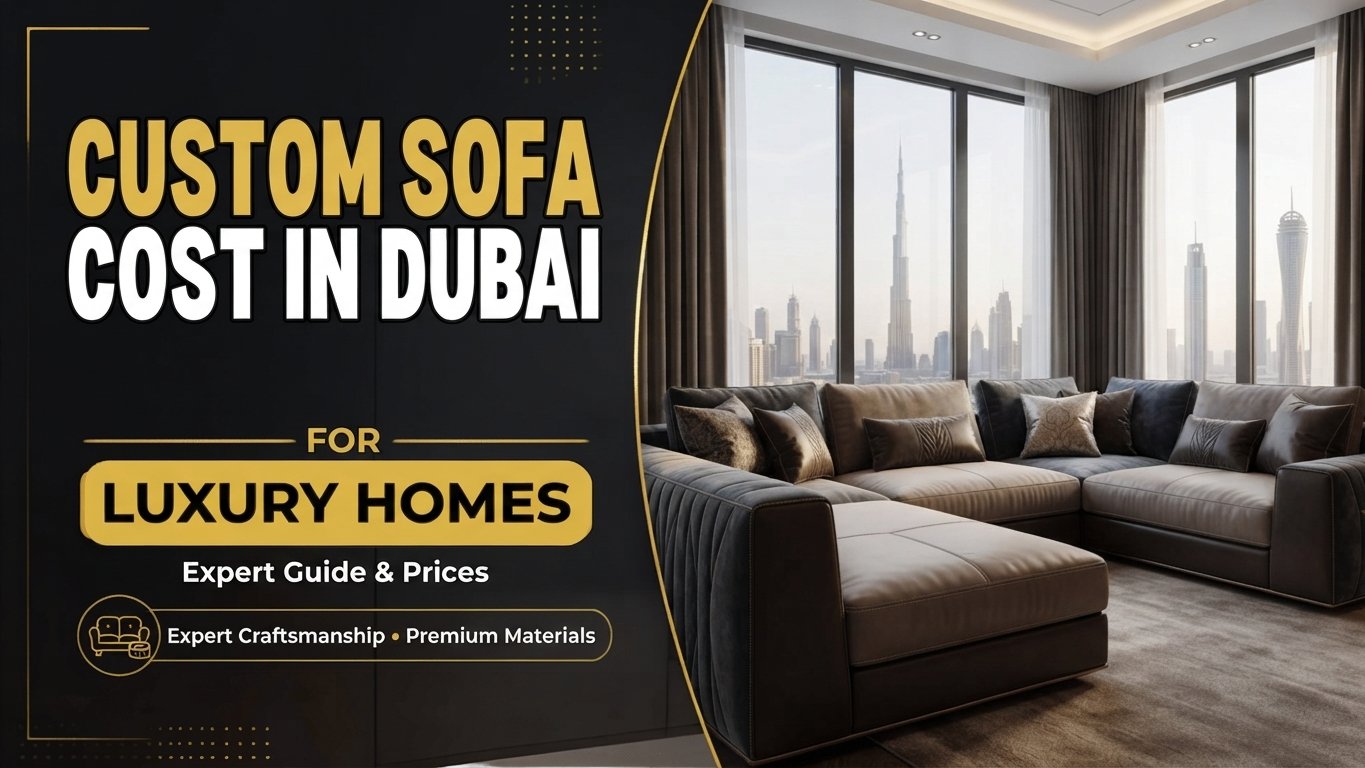
Investing in a custom sofa for your home in Dubai means creating a piece perfectly tailored to your space, style, and comfort needs. Unlike off-the-shelf options, a custom sofa offers unparalleled flexibility in design, dimensions, and materials. However, this bespoke approach often leads to questions about pricing. Understanding the various factors that influence the cost of a custom sofa in Dubai is key to making an informed decision and ensuring you get value for your investment.
The price of a custom sofa is not a fixed figure; it is a sum of many individual choices and material specifications. From the overall size and intricate design details to the quality of the fabric and the internal construction, every element plays a role in the final cost. This guide will break down the primary cost drivers, helping you navigate the options available and understand what to expect when commissioning a custom sofa in the UAE.
Understanding Custom Sofa Costs in Dubai
Several critical factors contribute to the overall price of a custom sofa. Each choice you make, from the frame to the finish, will impact the final quotation. By understanding these components, you can better align your budget with your design aspirations.
Size and Configuration
The dimensions and layout of your custom sofa are fundamental cost drivers. A larger sofa naturally requires more materials, labour, and time to construct. Consider the typical living spaces in the UAE; a compact two-seater might suit a smaller apartment in JLT or Downtown Dubai, while a sprawling five-seater with a chaise lounge could be ideal for a spacious villa in Arabian Ranches or Emirates Hills. Modular sofas, which offer flexibility in arrangement, can also influence cost depending on the number and complexity of the modules.
- Length and Depth: A longer or deeper sofa consumes more fabric, foam, and frame material.
- Height: Taller backrests or higher armrests add to material and construction costs.
- Configuration: Straight sofas are typically more straightforward to construct than L-shaped, U-shaped, or curved designs, which involve more complex joinery and upholstery.
- Number of Cushions: More seat or back cushions mean additional cutting, sewing, and filling.
When planning your sofa, think about your lifestyle and the exact dimensions of your room. A free home measurement service, available across Dubai, Abu Dhabi, Sharjah, and all other Emirates, is invaluable for ensuring your custom sofa fits perfectly without wasting space or overspending on unnecessary size.
Fabric Selection and Grade
The choice of fabric significantly impacts both the aesthetics and the price of your custom sofa. Fabrics are available in a vast array of colours, textures, patterns, and compositions, each with its own characteristics and cost implications. Fabric prices are typically quoted per metre, and the total amount needed will depend on the sofa’s size and design complexity (e.g., intricate patterns may require more fabric for matching).
In the UAE’s climate, durability, fade resistance, and ease of cleaning are important considerations. High humidity and strong sunlight can be harsh on certain materials. Performance fabrics, which are often stain-resistant, water-repellent, and highly durable, are an excellent investment, particularly for families or homes with pets, though they generally come at a higher price point. Natural fibres like linen or cotton offer breathability but may require more careful maintenance, while velvets or chenilles provide a luxurious feel but can show wear more easily in high-traffic areas.
Broadly speaking, fabric costs can range significantly:
- Entry-level fabrics: These might include standard cotton blends or basic polyesters, offering good value and a wide range of colours.
- Mid-range fabrics: This category includes more durable polyesters, microfibres, or blended natural fibres with enhanced textures or patterns.
- Premium fabrics: High-grade velvets, sophisticated jacquards, genuine leathers, or advanced performance fabrics fall into this tier, offering superior aesthetics, durability, and feel.
Always consider the fabric’s suitability for the UAE environment and your lifestyle. A fabric that looks beautiful but quickly fades in the sun or struggles with humidity may not be the most economical choice in the long run.
Foam Density and Fill Materials
The comfort, longevity, and feel of your sofa are largely determined by the quality of its internal cushioning. This includes the foam density for seat cushions and the type of fill used for back cushions and throw pillows. Higher density foam offers better support and retains its shape for longer, making it a more durable and comfortable option over time. While it may increase the initial cost, it reduces the need for frequent cushion replacement.
- Foam Density: Measured in kilograms per cubic metre (kg/m³), higher numbers indicate denser, more resilient foam. For a durable, comfortable sofa, a foam density of 35-40 kg/m³ is often recommended. Lower density foams are less expensive but compress more quickly.
- Back Cushion Fills: Options include fibre-fill (soft and plush but may require regular plumping), feather-fill (luxurious and soft but also requires plumping and can be costly), or a combination of foam and fibre for balanced support and softness.
The choice of fill directly impacts both the comfort level and the price. Premium fills and higher density foams will add to the overall cost but provide a superior seating experience and a longer lifespan for your sofa.
Frame Construction
The internal frame is the skeleton of your sofa, providing its structural integrity and determining its durability. A strong, well-constructed frame is essential for a long-lasting sofa. Materials and construction methods vary, impacting cost and quality.
- Solid Wood Frames: Frames made from kiln-dried hardwood (such as beech or oak) are considered the gold standard for durability and strength. Kiln-drying removes moisture, preventing warping and cracking, which is crucial in the UAE’s variable climate. These frames are the most expensive but offer exceptional longevity.
- Engineered Wood Frames: Plywood or MDF (Medium-Density Fibreboard) can be used, often in combination with solid wood. High-quality plywood, especially in thicker layers, can be robust, while lower-grade MDF is generally less durable and less expensive.
- Reinforced Frames: Look for frames that are reinforced at stress points with corner blocks, dowels, or screws, rather than just staples. This attention to detail in construction significantly enhances the sofa’s strength and stability.
An in-house workshop, where craftsmen oversee every stage of production, often ensures better quality control over frame construction compared to outsourced manufacturing.
Additional Features and Customisation
Beyond the basic structure and materials, any additional features or customisations will also contribute to the final price. The beauty of a custom sofa lies in the ability to specify every detail, but each bespoke element adds to the complexity and cost.
- Leg Design: Custom legs in unique materials (e.g., solid brass, chrome, specific wood finishes) or intricate shapes will cost more than standard, off-the-shelf options.
- Armrest Style: From sleek track arms to classic rolled arms or wide, cushioned arms, different styles require varying amounts of material and labour.
- Piping and Stitching: Contrasting piping, double stitching, or special tufting techniques (like button-tufting or channel tufting) add a layer of sophistication and increase the labour involved.
- Recliner Mechanisms: Manual or electric recliner functions, integrated into one or more seats, are significant additions that greatly increase the sofa’s price due to the cost of the mechanism and installation.
- Storage Solutions: Integrated storage compartments, often found in ottomans or under chaise sections, add functionality but also complexity to the design and construction.
- Special Finishes: Custom stain colours for wooden elements, unique upholstery techniques, or specific hardware requests will all factor into the overall cost.
Each custom detail should be carefully considered to balance your desired aesthetic and functionality with your budget.
What to Consider Before Getting a Quote
Before you approach a custom sofa maker, having a clear idea of your needs and preferences will help you get a more accurate and satisfying quote. Here are some practical checks and questions to consider:
- Measure Your Space: Accurately measure the length, width, and even height of the area where the sofa will sit. Don’t forget to measure doorways, hallways, and elevators to ensure the sofa can be delivered.
- Define Your Style: Do you prefer modern, classic, minimalist, or something else? Having reference images can be very helpful.
- Consider Usage: Will the sofa be for daily family use, or is it more for formal entertaining? This impacts fabric and foam choices.
- Think About Durability: Given the UAE climate and potential for heavy use, prioritise durable fabrics and high-density foam for longevity.
- Set a Budget Range: While you’re seeking a quote, having an approximate budget in mind can help the designer guide you through material options.
- Ask About Warranties: Inquire about structural warranties for the frame and any guarantees on foam or fabric.
- Understand the Process: Ask about the design consultation, material selection, production timeline, and delivery and installation process.
A reputable custom furniture company will offer a detailed consultation and provide transparent information about all these aspects.
The Bahoo Interior Difference
At Bahoo Interior, we understand that a custom sofa is an investment in your home’s comfort and style. We manage the entire process from design to installation, ensuring quality at every step. Our in-house workshop means there is no middleman, allowing us to maintain high standards and offer competitive value.
We provide a free home measurement service across all seven Emirates – Dubai, Abu Dhabi, Sharjah, Ajman, Ras Al Khaimah, Fujairah, and Umm Al Quwain – ensuring your custom sofa fits perfectly. Our commitment to quality includes using 40-density foam for superior comfort and durability, along with reinforced frames for lasting structural integrity. Every custom sofa comes with a structural warranty, providing you with peace of mind.
Once your custom sofa is crafted to your exact specifications, our team provides free professional installation, ensuring it is perfectly set up in your home. We believe in delivering premium, plain-spoken quality that speaks for itself, without unnecessary hype.
While the exact cost of a custom sofa in Dubai varies greatly depending on your specific choices, understanding these key factors will empower you to make informed decisions. For an accurate quotation tailored to your unique requirements, we invite you to book a free home measurement and consultation with Bahoo Interior today. Let us help you create the perfect bespoke sofa for your UAE home.
Frequently Asked Questions
What factors affect the price of a custom sofa in Dubai?
The price of a custom sofa in Dubai is influenced by its size and configuration, the grade and type of fabric chosen, the density and fill materials of the cushions, the frame construction, and any additional customisation features like recliners or special stitching.
Why is foam density important for a custom sofa?
Foam density directly impacts the comfort, support, and longevity of your sofa. Higher density foam (e.g., 40-density) offers better resilience, preventing the cushions from sagging prematurely and ensuring a more durable and comfortable seating experience over time.
Do you offer free home measurement and installation in the UAE?
Yes, Bahoo Interior provides a free home measurement service across all seven Emirates, including Dubai, Abu Dhabi, and Sharjah. We also offer free professional installation for your custom sofa once it is manufactured.
How does the UAE climate affect fabric choices for a custom sofa?
The UAE’s high humidity and strong sun exposure mean that fabric choices should prioritise durability, fade resistance, and ease of cleaning. Performance fabrics or certain natural fibres that handle these conditions well are often recommended to ensure your sofa remains beautiful for years.